Family Stories in the Archives

Every family has unique stories. It’s a lovely thing to sit down and recall times past that you’ve shared with people, and with the holidays approaching, November can be an opportune time to connect and dish (if you will). Since November is both Family Stories Month and Family Literacy Month , for this Photos of the Month, we’re sharing images and stories from our archives by family members about the physicists in their lives.
Henry Norris Russell, Jr. and Margaret Russell Edmonson on their father, Henry Norris Russell

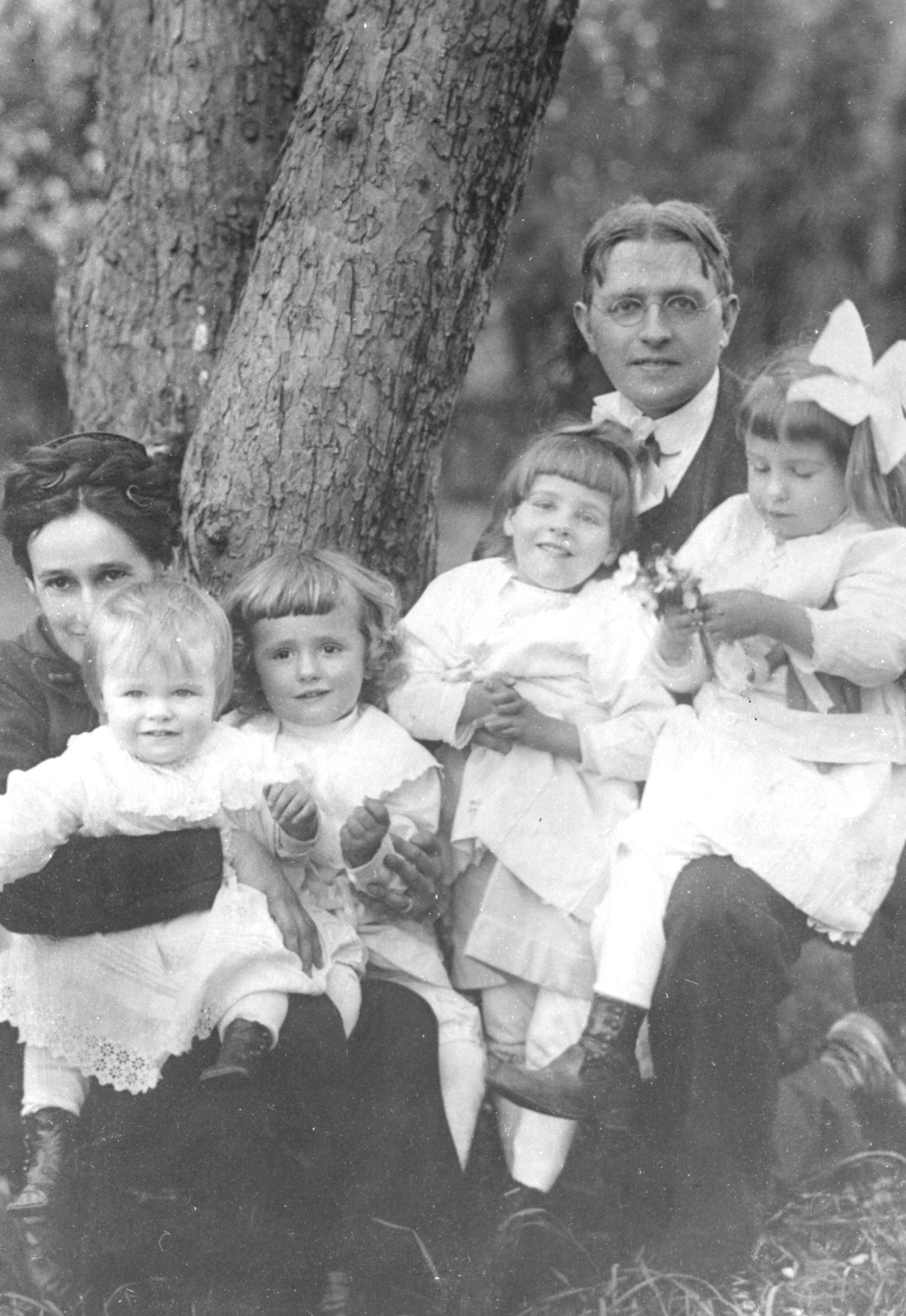
Henry Norris Russell, his wife Lucy May Cole, and four children.
AIP Emilio Segrè Visual Archives, Margaret Russell Edmondson Collection, Catalog ID: Russell Henry Norris G1
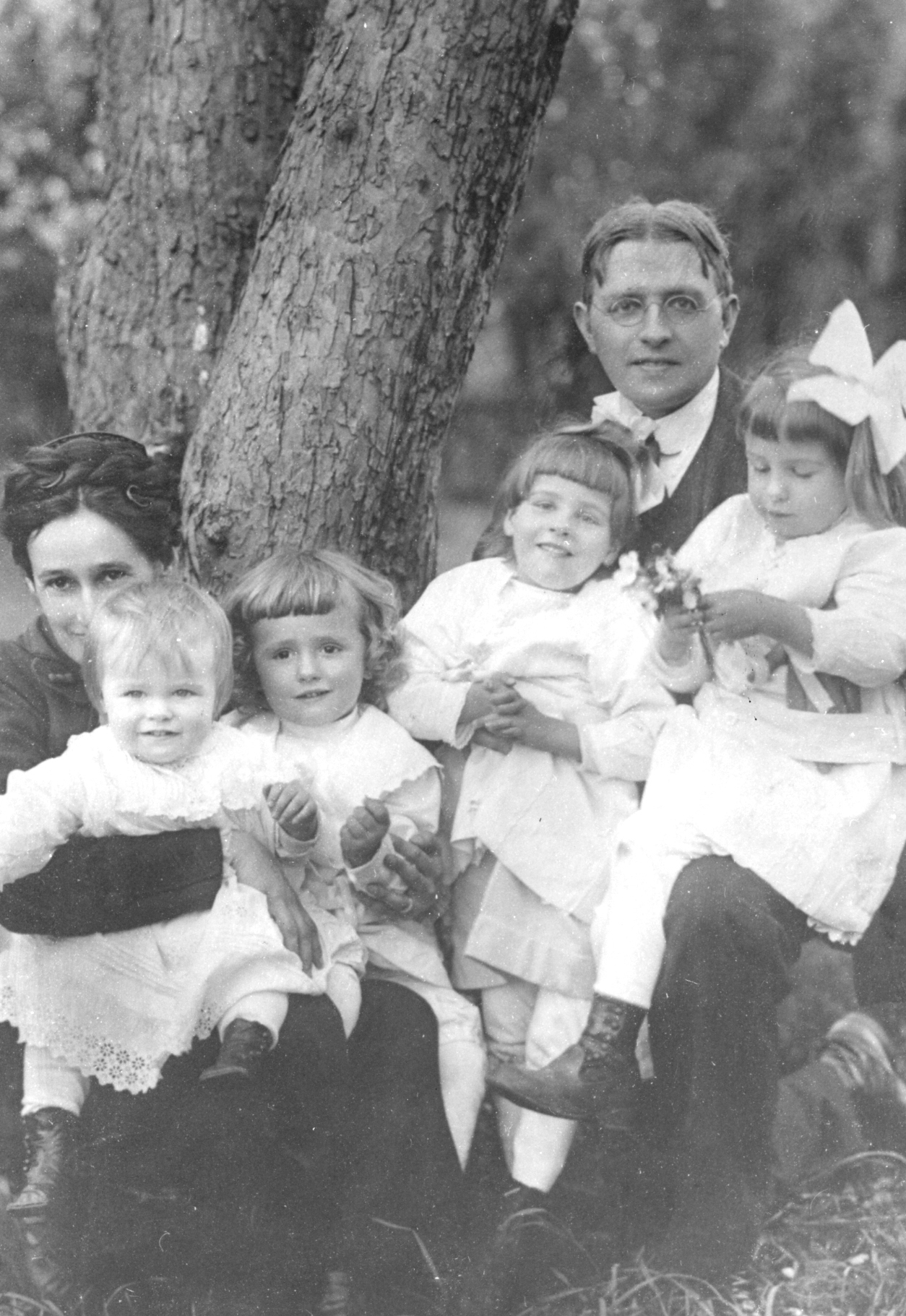
Henry Norris Russell (1877-1957) was an astronomer whose research on star measurements was instrumental during the early development of the field of astrophysics. He was a professor at Princeton for much of his career and a textbook author. In this image, he is sitting with his wife, Lucy May Cole, and four of his children, two of whom have been interviewed for our oral history collection: the youngest, Margaret Russell Edmondson, and the second youngest, Henry Norris Russell Jr.
With such an illustrious career, it’s very humanizing to hear what his children recall of him. In an oral history interview (OHI) with his son Henry Norris Russell Jr., we learn both about his father’s photographic memory and his shaky vocal talents that everyone witnessed at church:
Oh indeed he knew everything by heart. When he got up to sing he didn’t raise the hymn book, he just got up and sang. The only time he fumbled a little bit was when verses were dropped out because he would sing all of them and when verses were dropped off you know so that service was a little shorter -- why he might go on singing a verse that other people weren’t. He was very interesting in this way because he sang a little bit off key and wasn’t aware of it. It took me a long time to learn that I had to not sing out loud because I had the same difficulty with pitch that he had. But he sang loudly, I mean “a joyful voice unto the Lord.” That’s exactly the way he felt about it. He enjoyed the poetry of it but he was taking part in the service by making a joyful noise.
Margaret Russell Edmondson, who later in life married astronomer Frank K. Edmondson, recalled in her OHI the childhood joy of a Sunday drive:
Well, one of the things that was very typical — of course, during the week he was, over at the observatory all day — but on Sunday, in the afternoon, if the weather was halfway decent, we went out for a drive. We had a horse and buggy until 1929 — at least a buggy first, then later a surrey. And we only gave that up when the horse died of sunstroke when we were in Europe in 1930. So we would drive out in the country. He loved the countryside, and knew an enormous amount about flowers and trees and animals — well, just about everything in the natural world. He had favorite woods we’d go to, for different kinds of flowers. So the whole family would go driving Sunday afternoon.
Margrethe Bohr and Aage Bohr on Niels Bohr

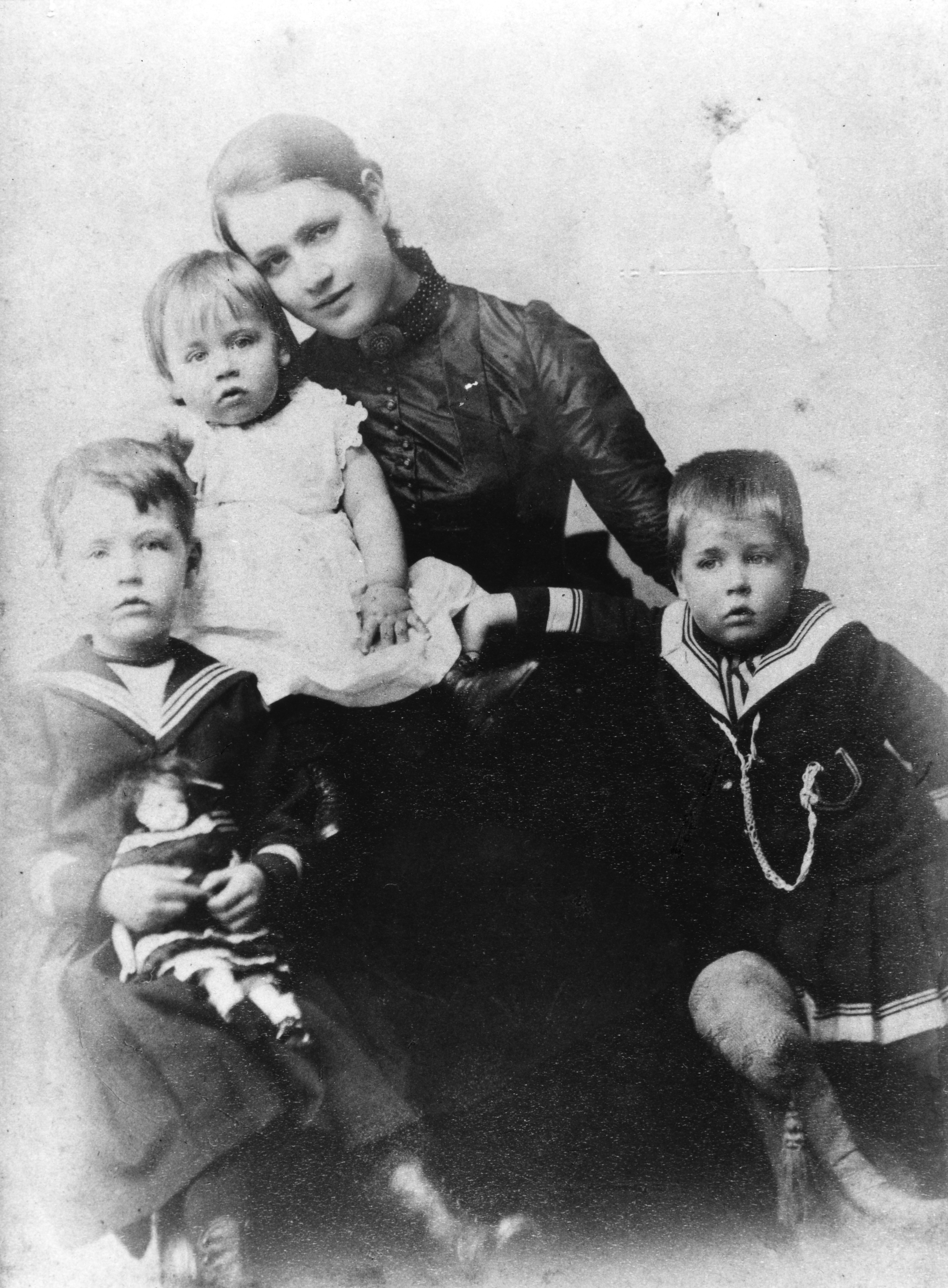
Portrait of the Bohr Family. Niels (age four) on the right, with his mother Ellen, brother Harald, and sister Jenny.
AIP Emilio Segrè Visual Archives, Margrethe Bohr Collection, Catalog ID: Bohr Niels G1
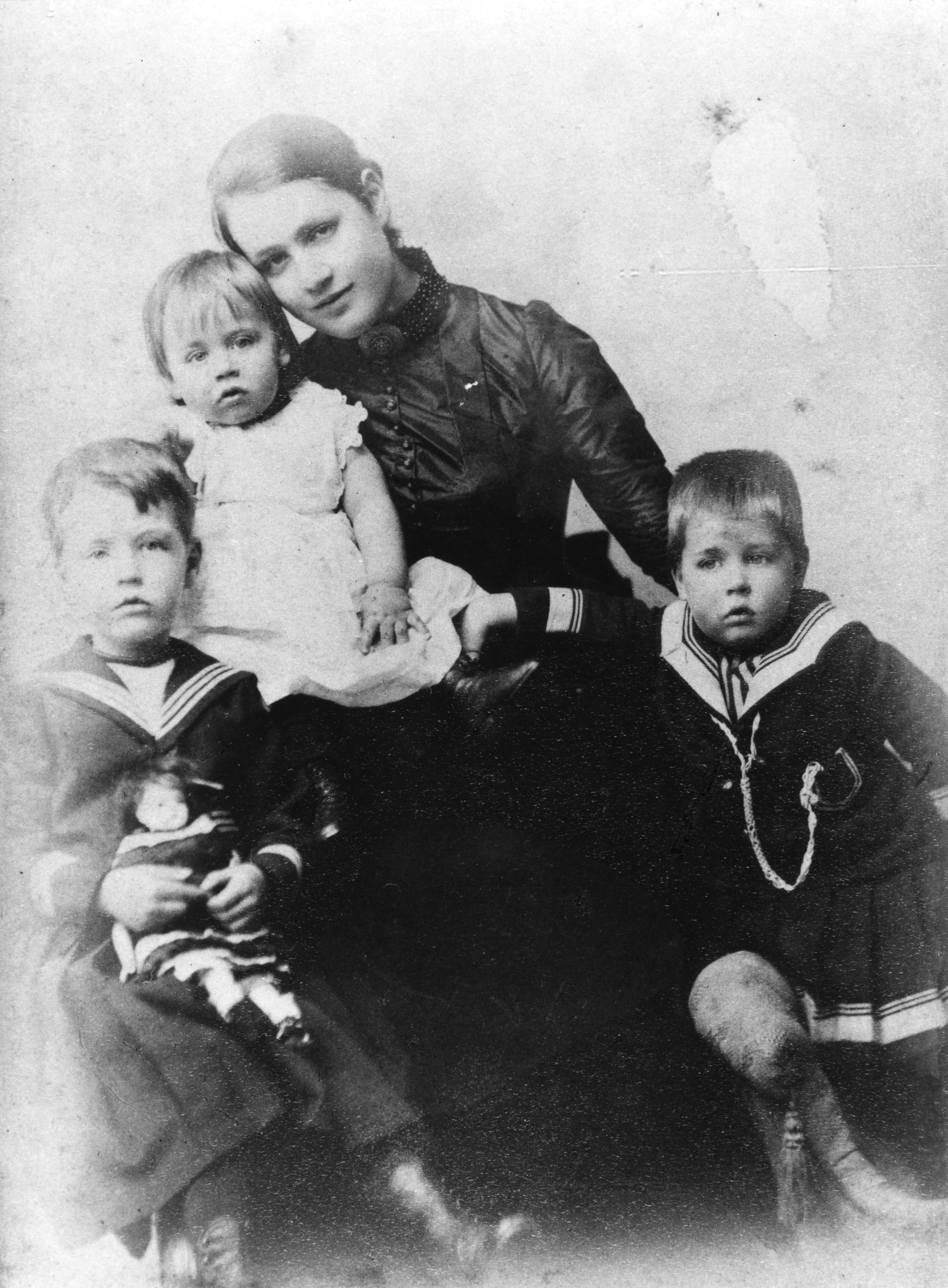
They had an old nurse who was also so sweet, and she looked after them. And Niels and Harald were so sweet to her, and Niels helped her to sew her buttons on, and Harald played the violin while they did it, so they were such sweet little boys.” - Margrethe Bohr on Niels and Harald Bohr as children
Margrethe Bohr (1890-1984) was Niels Bohr’s wife, but this does not accurately describe the depth of their partnership. Besides caring for their family of six sons, she was a sounding board in his career and became heavily involved in the logistics and writing side of his intellectual life. As her son Hans later said , “My mother was the natural and indispensable center… Father knew how much mother meant to him and never missed an opportunity to show his gratitude and love ...Her opinions were his [father’s] guidelines in daily affairs.”
NBLA holds several interviews with Margrethe, including the one quoted above (1963, done the year after Niels’ death in 1962) in which her son Aage Bohr is one of the interviewers, along with Thomas Kuhn and Léon Rosenfeld. Aage, like his father, became a Nobel Laureate in physics.

Margrethe and Niels Bohr sit outdoors, eating, drinking, and smiling, circa 1938.
AIP Emilio Segrè Visual Archives, Catalog ID: Bohr Niels G18

Left to right: Bri Hintz, Marietta Bohr (Aage’s wife), Margrethe (wife of Niels Bohr), Aage Bohr (son of Niels and Margrethe), and physicist Norton Hintz gathered at a table outside the Tisvilde, Denmark summer home, July, 1972.
Photograph by Norton Hintz, courtesy AIP Emilio Segrè Visual Archives, Hintz Collection, Catalog ID: Bohr Aage D3
Another fun little family story from Margrethe’s OHI involves Niels’ mother, Ellen, and his aunt Hanna – his mother’s sister. They had an interesting relationship:
There were often very funny little episodes there. I remember my mother-in-law [Ellen] was so sweet; she was so independent in such a gentle way. Then when Hanna got older she was deaf and telephoned many times a day, but also every evening, and wanted my mother-in-law to do so and so. She would say, “Have you now been to see these people? Have you now done this?” My mother-in-law never went out to see anybody, and sometimes she said, “Yes, I have; I have done it.” And sometimes when she hadn’t, she put a tea cozy on the telephone and said, “Now, I won’t be disturbed!”
Later in the OHI, Aage mentions that Hanna had a physics degree and would follow along well when Niels talked about physics.
NBLA also holds several OHIs with Niels Bohr himself.
Gerald Carruthers on brother George Carruthers

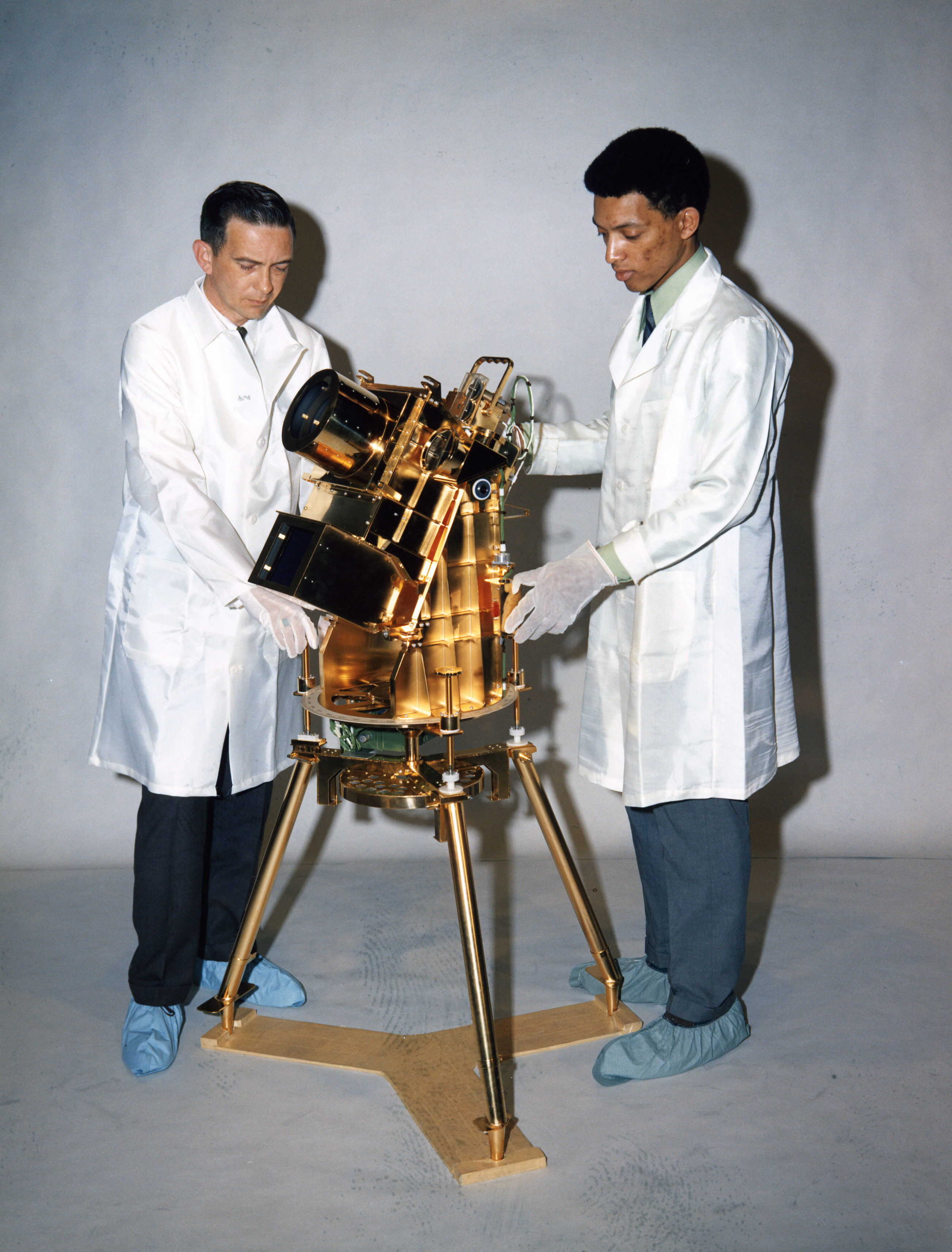
Project Engineer William Conway (left) and Principal Investigator Dr. George Carruthers (right) with the Apollo 16 Far Ultraviolet Camera/Spectrograph instrument. U.S.
Naval Research Laboratory (NRL), courtesy AIP Emilio Segrè Visual Archives, Ronald E. Mickens Collection, Catalog ID: Carruthers George F1
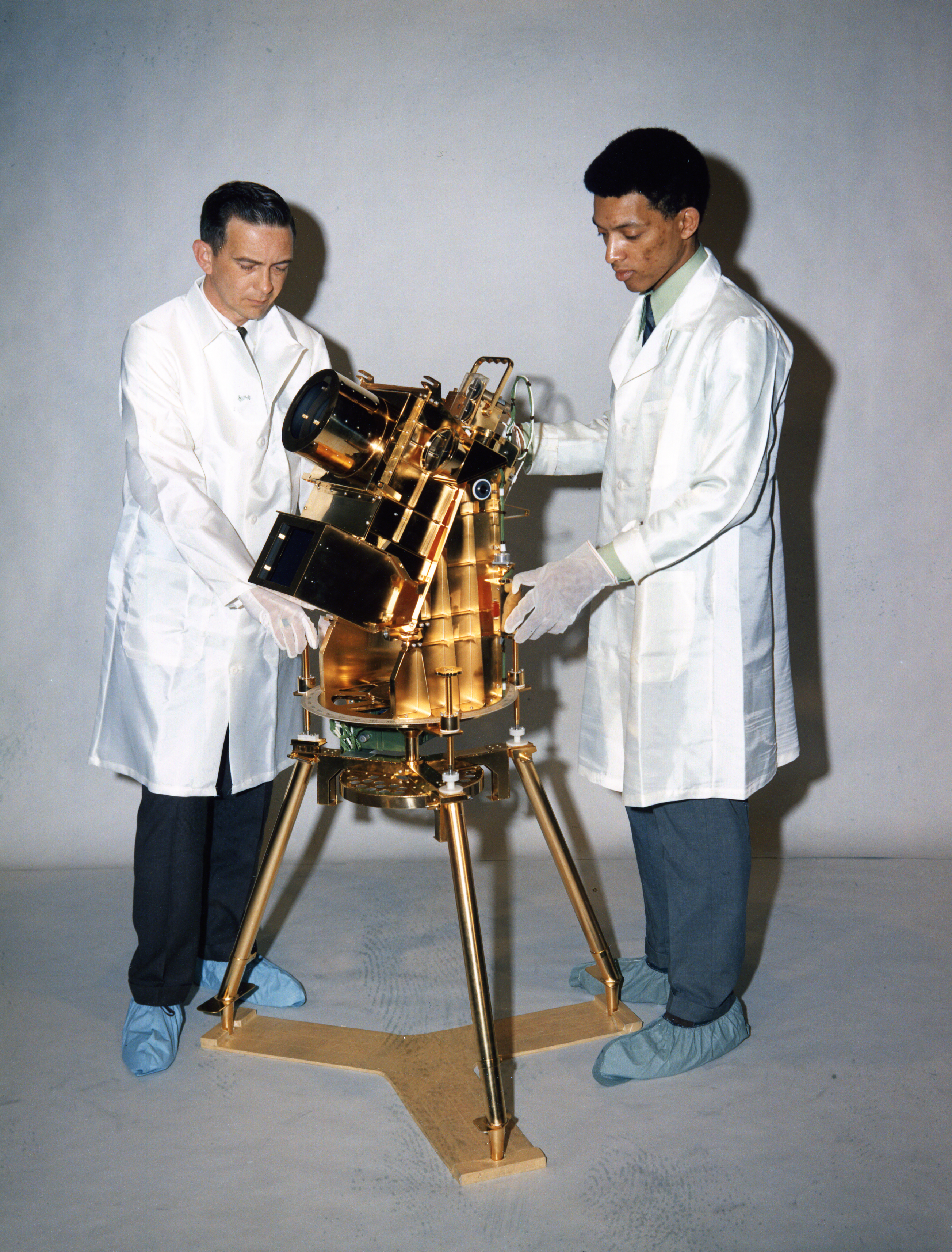
George Carruthers (1939-2020) was a physicist with a nearly 40-years long career (1964-2002) at the US Naval Research Laboratory who is best known for his inventions. In the above photo, he is posing with the spectrograph he designed, which was used in the Apollo 16 mission in 1970. He continued to develop cameras for missions throughout his tenure. His brother, Gerald Carruthers, told stories about George and their early childhood in Gerald’s 2020 interview :
George was a dedicated person. He was focused on one thing, and that’s the way he is all the way through life, all the way up until the time he retired. He had one thing on his mind, all the time, and that was it. I mean, that was it. He was an artist too, drawing spaceships going to and landing on the moon, and drawing space Christmas cards! When he was in Chicago, he had won a summer contest from the Chicago’s Art Institute, in downtown. Later I believe he dropped that hobby and moved on to engineering drawings.
Gerald also tells about the time George built a telescope:
And he built this one telescope, and he was so happy. He put it up in the area, and then accidentally, everything caught on fire out there in the weeds.
NBLA also holds an interview with George Carruthers.
Frank Oppenheimer on himself and brother Robert Oppenheimer

Robert (left) and Frank (right) Oppenheimer as children.
Frank Oppenheimer, courtesy of AIP Emilio Segrè Visual Archives, Catalog ID: Oppenheimer J Robert G1
Although his brother, J. Robert Oppenheimer, is arguably more well-known due to his role in the development of the atomic bomb, Frank Oppenheimer also had a substantive career as a physicist, professor, and member of the Manhattan Project. In his OHI with interviewer Charles Weiner , Frank Oppenheimer talks about his interests and childhood, including how his parents and his brother influenced and supported him. In this section, he talks about his hobbies, including how he studied the flute with Georges Barrère, principal of the New York Symphony Orchestra (now the NY Philharmonic) thanks to his parents, and how he enjoyed tinkering with gadgets, as he calls them.
Frank Oppenheimer:
And when I got interested in the flute, they were away in Europe right after that and brought me back a wooden flageolet. I was sick when they came back and I learned to play that, and wanted to go on to the flute and they found a flute teacher, and the flute teacher they found was Georges Barrère. He was really one of the greatest flutists in the country. They went and consulted with him and found out what kind of a flute to buy, and I had two or three marvelous years of lessons with him. Once I asked him to come to the house and play for my parents’ anniversary, to play for them. He couldn’t put on a concert because of his agent and what not, but he agreed to come and give me a lesson in the house, but the whole lesson was [a concert] — and my parents sat there very formally, and he said he felt he was playing for a little royal family.
Weiner:
How long did that go on?
Oppenheimer:
For about three years. Then I went away, but whenever I happened to be in the same town with him I’d go for a lesson. If he came to give a concert in Los Angeles or Baltimore.
Weiner:
So you kept on. What about hobbies. You mentioned your brother had minerals — his preoccupation, I gather. What about yours?
Oppenheimer:
Well, my earlier hobbies were pretty much gadgetry. I was very good at, when I was very young I think, taking apart bicycles and putting them together. I used to wander around New York City and there was a street called Centre Street, which had nothing but second-hand electric motors on it, and I’d get the electric motors. I would use the DC that we had in our apartment for welding and would often practically not be able to see for days. I didn’t know enough, not to worry about the ultraviolet. So this kind of gadgetry and wiring and playing with motors and making things was a hobby. My brother kept giving me little things. He left me a microscope when he went to college. And once he saw a gadget in a store when he was in Harvard and sent it to me without knowing what it was, and it turned out to be a slide microtome, and I had a good time slicing everything and looking at it under the microscope. In fact it was quite nice, using a microscope to look at all kinds of organic and inorganic things and getting fantasies about them.
Ella Philippson Ewald and Peter Paul Ewald

Paul Peter Ewald (right) and Mrs. Ewald [Ella Philippson] (left).
AIP Emilio Segrè Visual Archives, Catalog ID: Ewald Paul G1
When you are doing an oral history interview, often you are talking about events that happened long ago, and it can be hard to remember everything. German crystallographer Paul Peter Ewald was interviewed for his oral history alongside his wife, Ella Ewald (full name Elise Berta Philippson, 1891–1993). The couple met when Ella was a medical student and lived at a boarding house in Göttingen with Max Born, Theodore von Kármán, and other scientists and mathematicians.
Throughout the OHI , she interjects corrections and gives more context for the subjects at hand. In this excerpt, Paul Peter is remembering his first visit to America, in which he is driven by his 19-year-old daughter, Rose (she later married physicist Hans Bethe). Rose had only recently arrived in New York and gotten her license.
Paul Peter Ewald:
I started out from Stuttgart, skipping the last few days or even weeks, of the semester, and bearing in mind that I would show these American physicists what real physics are—all the high-headedness of a German full professor in me. And so I took the boat over and landed in New York, and the arrival in New York was very spectacular because at the pier were my daughter Rose and Nina Courant, who came to pick me up.
Ella Ewald:
Rose, 19 years old ...
Paul Peter Ewald:
Rose had come to America a few weeks before me and the day before she met me at the pier she had passed her driving exam and got her license. And it was a new car the Courants had bought, and Mrs. Courant was in the back. And the boat arrived at five o’clock in the afternoon, and I said, “I must first go to the Cunard Line office, which is in downtown Manhattan.” And so she had to take me through the heaviest traffic of the day, and I didn’t know at that time what I did to her. But we arrived with only one little bump, safely in New Rochelle at the Courants.
The OHI also discusses other prominent physicists of the era, and it’s evident that both members of the couple had memories and relationships with these scientists. In this excerpt, they are discussing Wolfgang Pauli.
Paul Peter Ewald:
I don’t know whether Ella said that already, that Pauli at school had worked physics, and found the vacations the easier part of life. During school he had to go to bed at 12 o’clock, whereas in the vacations he was allowed to stay up as long as he liked and so he worked through all night. Then he told us how he went to a classics school, and they had the verbs on (‘mi’) in Greek. Now that won’t tell you anything, but this is a certain stage of teaching Greek where some of the irregular verbs begin, and it’s quite an incision. Pauli read Weyl’s Baum Zeit und Materie. And the teacher came to him and said, “Why do you always read this stupid stuff?”
Ella Ewald:
But at that time you wouldn’t have guessed that he would become on the human side such a wonderful personality. You would think he might develop in a very one-sided scientist. But you see when in ’49 we met him there, we told him that we would go to America. We were just finishing in Belfast. And, he said in his frank way, “I don’t like that. I don’t like the idea that at this age you still change from one country to another one.” And I wouldn’t have expected it from him. I thought it was very nice that he said it so warm-heartedly and unafraid.
Paul Peter Ewald:
Yes, this was in Florence at the conference which had been arranged by the Union of Pure and Applied Physics on statistical methods. It was a very nice conference.
There are many more family stories and other fun asides in the oral history collection. We hope you have a cozy and flavorful end of November!