In Case You Missed It
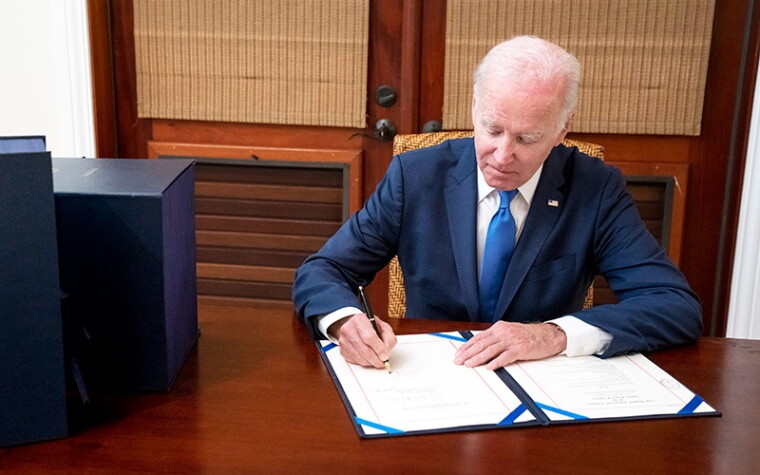 |
| President Biden signed the final appropriations legislation for fiscal year 2023 on Dec. 29. (Image credit – Erin Scott / The White House) |
Final FY23 Budget Broadly Boosts Science Budgets
After a months-long stalemate, Congress passed legislation on Dec. 23 that finalizes federal agencies’ appropriations for fiscal year 2023 and President Biden signed it on Dec. 29. The legislation broadly increases the budgets of science agencies, including an 8% increase for the Department of Energy Office of Science, a 12% increase for the National Science Foundation, and a 32% increase for the National Institute of Standards and Technology. However, the NSF increase is entirely from a special supplementary appropriation and about half the NIST increase is for earmarked projects outside the agency. Even with these funds included, the appropriations for the agencies fall well short of the targets Congress set this summer through the CHIPS and Science Act. The budgets for other science agencies will generally keep pace with inflation, though a notable exception is that NASA’s Science Mission Directorate budget is only increasing 2%.
The legislation is accompanied by explanatory statements that include detailed budget allocations and policy direction. Figures for program-level funding outcomes are collected in FYI’s Federal Science Budget Tracker. Excerpts of the statements covering selected agencies are linked below:

Biden Signs Annual Defense Policy Bill
Science Committee Republicans Float Major NOAA Policy Bill
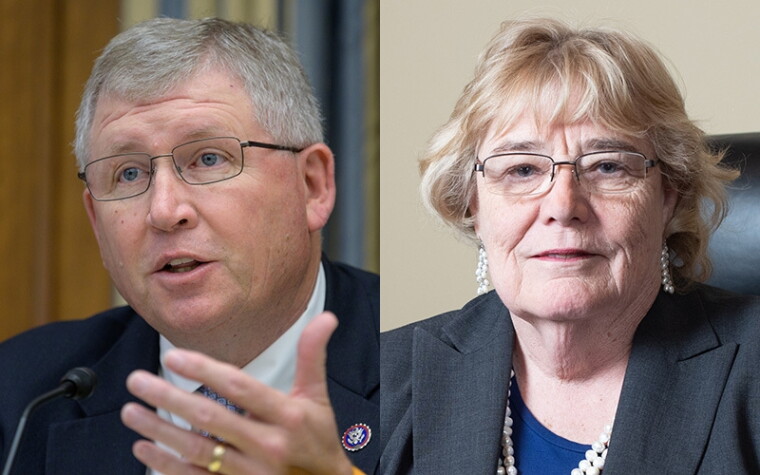
On Dec. 21, incoming House Science Committee Chair Frank Lucas (R-OK) announced one of his top priorities this year will be developing legislation that would remove the National Oceanic and Atmospheric Administration from the Commerce Department and make it an independent agency like NASA. The move would be a central provision of a bill known as an “organic act” that would also enshrine NOAA’s existence in statute for the first time. The agency was created by President Richard Nixon in 1970 through an executive order known as Reorganization Plan No. 4, which placed it within the Commerce Department rather than following an advisory council recommendation to house it in the Department of the Interior. While Nixon’s order was grounded in broad authorities granted to the president by statute, Congress has never formally backed the specifics of his plan.
As part of his announcement, Lucas released draft legislation that would rescind Reorganization Plan No. 4 and reestablish NOAA’s organization from scratch. The legislation would keep the National Weather Service within NOAA while elevating the Office of Space Commerce out of NOAA and making it an agency of the Commerce Department. Other elements of NOAA’s organization are left unspecified, with the agency directed to develop and implement its own reorganization plan that would maximize its efficiency in carrying out core functions. Lucas remarked in a statement that the draft is based on “years of extensive conversations with stakeholders” and that he aims to pass the legislation during the 118th Congress in cooperation with the Senate and the Biden administration.
Next Landsat Mission To Be Trio of Satellites
NASA and the U.S. Geological Survey announced on Dec. 20 that the next mission in the venerable Landsat series will comprise three identical satellites, marking a departure from previous Landsat missions’ single-satellite architecture. Although smaller in size, the new satellites will be able to observe with improved spatial resolution and in 15 more spectral bands than Landsat 9, which launched in 2021 and observes in 11 bands. The Landsat program has now provided a continuous 50-year record of land imagery and data, and a principal aim of the new three-satellite configuration is to provide updated imagery with greater frequency. It also follows commercial satellite service providers in moving toward use of disaggregated satellite constellations. At a Senate hearing in December, USGS official Kevin Gallagher explained in his written testimony that Landsat still provides value amid commercial options because of the continuity and precise calibration of its datasets and because its medium-resolution infrared imagery is not expected to be commercially viable in the next decade. He also indicated that commercial service providers are eager for the government to maintain “gold standard” systems such as Landsat.
Mars InSight Mission Concludes
NASA retired its Mars InSight lander on Dec. 22 after it missed two communications attempts with Earth following a steady decline in battery power as its solar panels became coated in dust. NASA selected the mission as part of its Discovery program in 2012 and launched it in 2018 after it missed its first launch opportunity two years earlier. Its primary mission concluded in 2020 and since then it had been undertaking an extended mission. InSight’s goal was to monitor seismic activity on Mars to gain clues about the planet’s internal structure. It did so largely successfully, demonstrating that Mars is tectonically active, and by chance it detected vibrations from a major meteoroid impact that the Mars Reconnaissance Orbiter visually observed last year. However, the mission was also hampered by the failure of a heat probe instrument to burrow beneath the surface due to unexpected properties of the Martian soil. The mission’s total cost was about $850 million.
DOE and NOAA Nominees Confirmed
In the waning days of the 117th Congress, the Senate confirmed three science agency leaders on voice votes:
- MIT engineering professor Evelyn Wang as director of the Advanced Research Projects Agency–Energy
- Energy industry attorney and executive Gene Rodrigues as head of the Department of Energy’s Office of Electricity, and
- Climate policy expert Jainey Bavishi as assistant secretary of commerce for oceans and atmosphere, a top-level role within the National Oceanic and Atmospheric Administration.
Still awaiting confirmation are Jeff Marootian to lead the DOE Office of Energy Efficiency and Renewable Energy and David Crane to be DOE under secretary for infrastructure. Both are currently serving in DOE roles that do not require confirmation. Nick Guertin, currently the Defense Department’s Director of Operational Test and Evaluation, is awaiting confirmation to be assistant secretary of the Navy for research, development, and acquisition.
Science Leaders Step Aside With New Year
Several key leaders at science agencies and labs have left their roles as of Jan. 1, having previously announced departure plans last year:
- Thomas Zurbuchen has left his position as head of NASA’s Science Mission Directorate, which he had held since 2016. The directorate’s deputy head Sandra Connelly will take his place as NASA conducts its search for his successor.
- Dennis Andrucyk has stepped down as director of NASA’s Goddard Space Flight Center after three years in the role. NASA Chief Program Management Officer Dave Mitchell is now acting director.
- Thomas Zacharia has retired as director of Oak Ridge National Lab. Zacharia worked at the lab for 35 years and had been its director since 2017. The lab’s interim director is Jeff Smith, who retired as its deputy for operations in 2021.
- Anthony Fauci has stepped down as President Biden’s chief medical adviser on COVID-19 and as director of the National Institute of Allergy and Infectious Diseases. He is capping off a tenure of extraordinary length, having been the institute’s director since 1984.
Emerging Biotechnology Commission Members Named
The House and Senate Armed Services Committees have announced the full 12-member roster for the National Security Commission on Emerging Biotechnology, a panel established by Congress a year ago to review advances in the field as well as associated threats and policy issues. The commission will be chaired by Jason Kelly, CEO of Ginkgo BioWorks, a Boston-based synthetic biology company, and its vice chair will be Michelle Rozo, who until recently led biotechnology R&D efforts at the Defense Department. Other commission members include Reps. Stephanie Bice (R-OK) and Ro Khanna (D-CA), Sens. Alex Padilla (D-CA) and Todd Young (R-IN), and former Google CEO Eric Schmidt, along with others from academia, industry, and government. Congress has directed the committee to submit a final, unclassified report within two years that recommends actions Congress and federal agencies can take to strengthen U.S. activities, with an interim report due within a year. The commission follows on the heels of the National Security Commission on Artificial Intelligence, which was led by Schmidt and completed its work in 2021.
NATO Revs Up Innovation Accelerator With US Official in Key Role
At a meeting last month, the board of directors of the Defence Innovation Accelerator for the North Atlantic (DIANA) elected its U.S. member Barbara McQuiston to be its first chair. The member countries of the North Atlantic Treaty Organization agreed to create DIANA in 2021 and approved its charter last year, with the goal of investing €1 billion in technology startups over a period of 15 years through a new venture capital fund. The initiative will focus on nine emerging technology areas, and at last month’s meeting the board selected energy resilience, secure information-sharing, and sensing and surveillance as its priorities for 2023. Before joining DIANA’s board at the end of October, McQuiston was the U.S. Defense Department’s deputy chief technology officer for science and technology, overseeing its laboratories and portfolio of early-stage R&D. During the Obama administration, she worked at the Defense Advanced Research Projects Agency and in 2021 she performed the duties of under secretary of defense for research and engineering before Heidi Shyu was confirmed to that role.
|